


Suffix number plates.
Issued from 1963 to 1983, suffix plates carry a year letter at the end. A classic style, now highly sought after as personalised registrations.
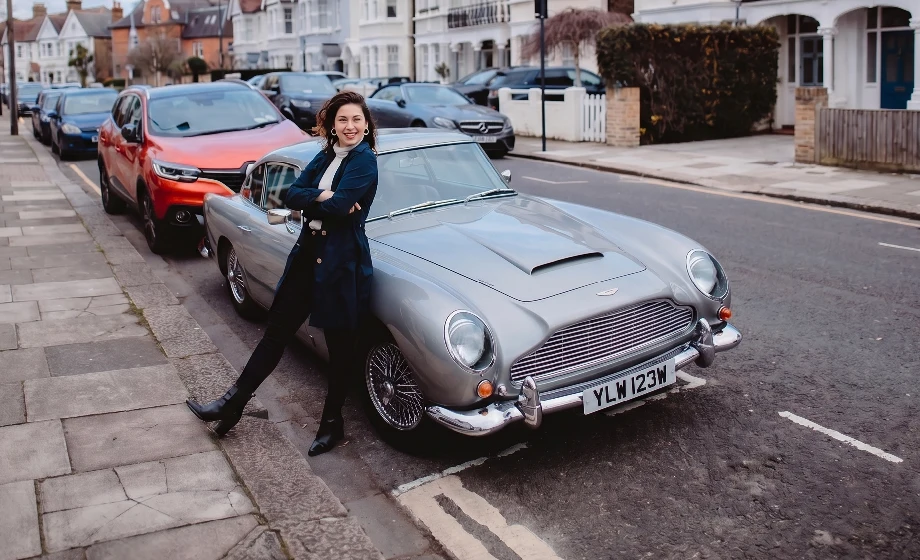
A suffix number plate is a UK registration issued between 1963 and 1983, with a single year-identifying letter at the end. The format is three letters, then one to three numbers, then the year letter, for example YLW 123W. The first letter is a sequence letter and the second and third are the area code showing where the plate was first registered. Suffix plates are popular as personalised registrations because the letters sit at the front, which makes names and initials easy to read.
Year identifiers
Suffix number plate years
Each suffix letter marks the year the plate was first issued. The letters I, O, Q, U and Z were never used as year identifiers.
Want to check a specific plate? Use our free vehicle age checker.
Read any plate
How to read a suffix number plate
Take YLW 123W as an example.
YLW 123W- First letter — a sequence letter, used to expand the number of available combinations.
- Second and third letters — the area code, showing the region where the plate was first registered.
- Numbers — from 1 to 999, making each plate unique within its letter series.
- Final letter — the year identifier. On YLW 123W, the W means it was first issued between 1980 and 1981.
A piece of motoring history
The classic plate era
Suffix plates were introduced in 1963 to expand the number of available registrations as more cars reached the road, and they ran until the prefix style took over in 1983. That span covers the classic era from the sixties through the seventies and into the early eighties, which is why suffix plates are the natural choice for owners of 1960s, 70s and 80s classics looking for a registration that suits the age of the car.
They carry some history too. The Aston Martin DB5 driven by James Bond in Goldfinger wore the suffix plate BMT 216A, an A-series plate from 1963.
Because a suffix plate reveals a minimum age, it cannot be put on a vehicle registered before the plate's year, the same age rule that applies to all dated registrations. If you want a plate with no age restriction, look at dateless and cherished plates instead. For the style that followed, see prefix number plates.
Suffix number plate FAQs.
A suffix number plate is a UK registration issued between 1963 and 1983 with the year letter at the end. The format is three letters, one to three numbers, then the year letter, such as YLW 123W.
Suffix plates were issued from 1963 to 1983. The year letter runs from A in 1963 through to Y in 1982 to 1983, skipping I, O, Q, U and Z.
It is the year identifier. Each letter marks the year the plate was first issued, so a plate ending in L was first registered between 1972 and 1973.
Yes, as long as the plate does not make the vehicle look older or newer than it is in a way that breaks the age rule. A suffix plate can go on a vehicle of the same age or newer, but not one registered before the plate's year. Check your vehicle's age before you buy.
From £40 plus VAT and the £80 DVLA fee. Suffix plates often cost a little more than prefix plates because the letters sit at the front and the combinations are scarcer.
Find your suffix number plate
Search 71 million UK registrations from £40 plus VAT and DVLA fee. We handle the paperwork.